The average American household throws out about $1,500 of food every year. Not because they didn't want to eat it. Because they forgot they had it, bought duplicates, or planned around meals they never made.
Meal planning fixes this. But not the aspirational Pinterest kind where you make a beautiful chalkboard menu every Sunday. The boring, functional kind that lives on your fridge and takes 15 minutes to fill out.
Here's the system, plus the specific printable templates from Etsy that make it stick.
The 4-part meal planning system
You need four printables, not one:
1. Weekly meal planner
A grid with 7 rows (days) and 3 columns (breakfast, lunch, dinner). Some also have a snacks column. This is where you write what you'll actually eat.
Not required: Cute illustrations, elaborate meal categories, "theme night" columns. Skip anything decorative.
2. Grocery list template
Organized by store section (produce, dairy, pantry, frozen, meat), not by meal. You'll walk the store faster and won't forget half of what you need in the last aisle.
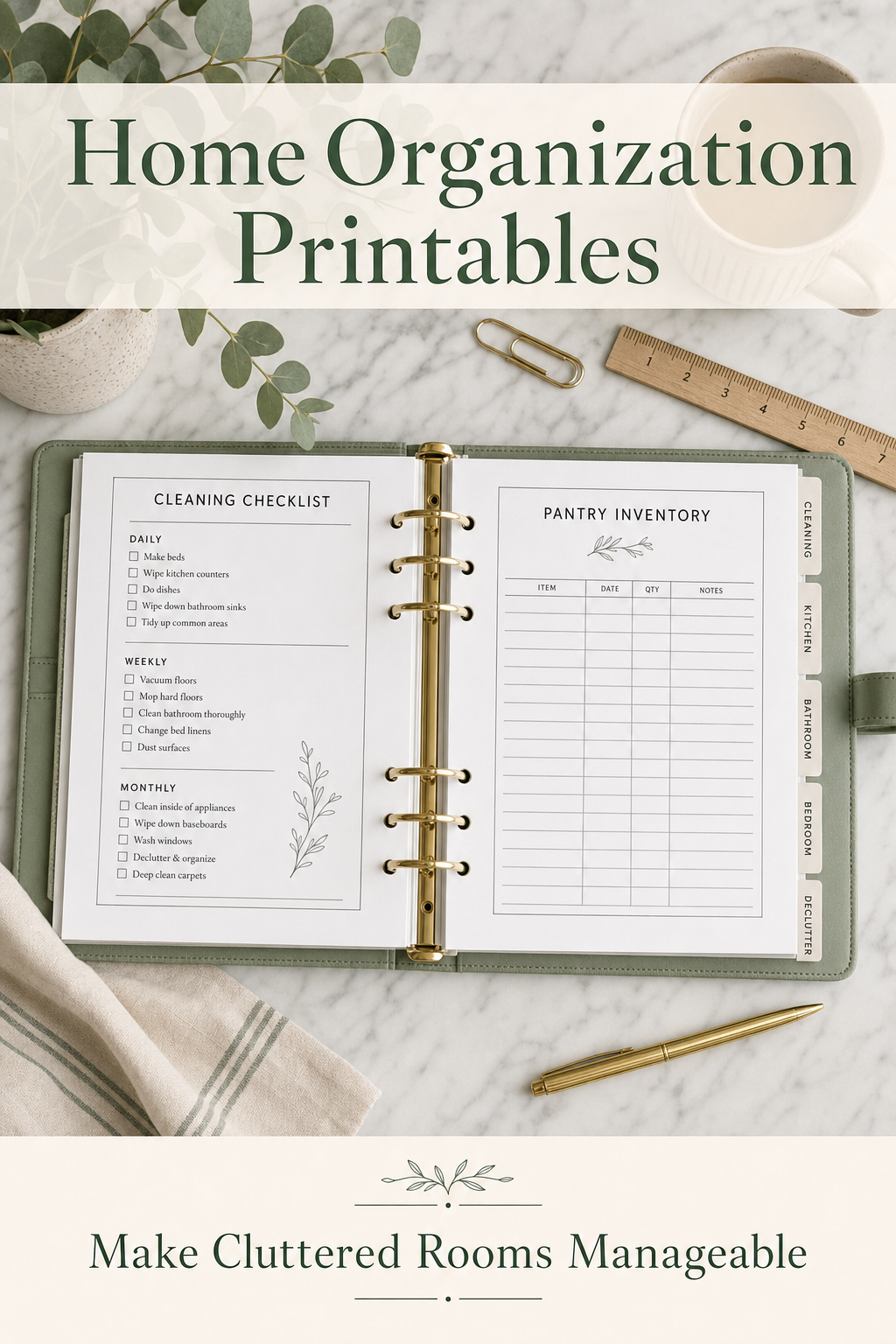
3. Pantry inventory
The single most important printable in the set. Fill it out once. Update it monthly. Never buy a duplicate can of coconut milk again.
4. Recipe stash sheet
A running list of your household's "yes" recipes — meals everyone eats without complaint. When you're planning, you pick from this list first, then add 1–2 experiments.
The 15-minute Sunday meal plan process
Do this once a week, ideally Sunday afternoon:
- Check the pantry inventory (2 min). What needs to be used before it expires?
- Check your calendar (2 min). Which nights are you home? Which nights need something fast?
- Fill the meal planner (5 min). Start with the "use up" ingredients, then fill from the recipe stash sheet, then add 1 new meal.
- Build the grocery list (5 min). Only what you don't already have.
- Update the pantry inventory after shopping (1 min).
Total time: 15 minutes. Total savings: roughly $60–$120/week for a family of four, according to USDA data on food waste.
Why templates beat apps for meal planning
I've tried Paprika, Plan to Eat, AnyList, Mealime. They all work for about 3 weeks and then everyone stops using them because opening the app is one more thing.
Printables win because:
- They're always visible on the fridge. No opening required.
- Anyone in the house can add to the grocery list without an account.
- Filling out a paper form is more thinking-intensive than tapping through recipes, which paradoxically means the plan you make is better.
That said — I do use one digital tool alongside printables: Google Keep or Apple Notes for the "add to grocery list" shortcut. Someone uses the last of the olive oil? Say "Hey Siri/Google, add olive oil to grocery list." Then transcribe it to the printable on Sunday.
What to look for in a meal planning printable
- Landscape orientation for the weekly planner. The days-across format is way more readable than days-down.
- Grocery list organized by store section, not by meal or ingredient type.
- Editable PDF fields, not just Canva. You want to type into it directly if you prefer.
- Includes a shopping list on the same page as the weekly plan. Reduces friction.
- Under $10. Anything more expensive is over-designed.
My top Etsy picks
Affiliate note: This post contains affiliate links. When you buy through these links, I earn a small commission at no additional cost to you.
1. The all-in-one meal planning set
Weekly planner + grocery list + pantry inventory + recipe stash in a single download. Best bang for your buck.
Where to buy: ETSY — complete meal planning printable set
2. The minimalist weekly planner
If you just want the weekly planner and don't need the extras. Prints on one sheet, hangs on the fridge.
Where to buy: ETSY — minimalist weekly meal planner
3. Freezer meal planning bundle
For anyone doing batch cooking. Freezer inventory log + prep sheets + cook-once-eat-all-week menus.
Where to buy: ETSY — freezer meal planning printables
4. Grocery list by store section
Standalone grocery list template if you already have your own meal planner. Sorted by aisle.
Where to buy: ETSY — printable grocery list by section
How to save even more with meal planning
Meal planning alone will cut your grocery bill 20–30%. To cut it 40–50%:
- Plan around what's on sale, not what sounds good. Check your grocery store's weekly circular before you plan. Build meals around discounted proteins.
- Batch cook one grain and one protein per week. Rotate through different sauces and vegetables so it doesn't feel like leftovers.
- Track what actually got eaten vs. wasted. Adjust portions and repeat orders based on real consumption, not aspirational.
- Shop once, not thrice. Every unplanned grocery trip = $30–50 in impulse buys.