Most cleaning schedules fail for the same reason most gym plans fail: they assume ideal weeks, not real ones.
The idealized version — "Monday floors, Tuesday bathrooms, Wednesday laundry" — collapses the first time a kid gets sick or you have back-to-back work meetings. And once you skip Monday, the whole system is dead by Wednesday.
The version that actually works: a schedule designed to survive bad weeks. That means daily tasks under 10 minutes, weekly deep-cleans that can float within a 3-day window, and a monthly reset that lives on your calendar, not your fridge.
Here's the exact structure that keeps my house presentable even during 60-hour work weeks, plus where to find good printable versions on Etsy.
The three-layer system
The reason most cleaning schedules feel overwhelming is they mash daily, weekly, and monthly tasks into one giant list. The visual weight is exhausting before you even start.
Split them into three:
Layer 1: Daily (10 minutes total)
Non-negotiable, done every day, mostly on autopilot after 2–3 weeks.
- Make bed (2 min)
- Clear kitchen counters + dishes (5 min)
- One "10-minute tidy" of the highest-mess room (10 min — this is your only real block of time)
Total: 17 minutes actual time, which we round up to "10 minutes" because half of it doesn't feel like cleaning.
Layer 2: Weekly (60–90 minutes, split across the week)
The big rotation. Each item is a 20-minute task, and you do 3–4 per week. They float — you can do them Monday or Saturday, morning or evening.
- Vacuum main living areas (20 min)
- Clean primary bathroom fully (20 min)
- Clean kitchen surfaces + appliances (20 min)
- Dust visible surfaces (15 min)
- Change bed linens (20 min)
- Empty all trash and take out (10 min)
- Mop hard floors (20 min)
Pick 4 per week. Rotate the rest.
Layer 3: Monthly (one Saturday morning)
The "invisible" cleaning that keeps the house from slowly degrading.
- Clean interior windows
- Dust ceiling fans + light fixtures
- Wipe baseboards
- Deep clean fridge or oven (alternate months)
- Wash shower curtain
- Vacuum under couch cushions
- Check smoke detectors + replace filters if due
Put this on a calendar recurring event, not a printable. Printables get lost. Calendar reminders don't.
Why the printable actually helps
Even with the system above, there are two moments where a physical printable makes a real difference:
- Sunday planning — laying out which of the 7 weekly tasks you're doing this week, and when. Takes 30 seconds with a checklist on the fridge.
- When someone else in the house helps — "Hey, can you grab something from the list?" only works if there's a visible list.
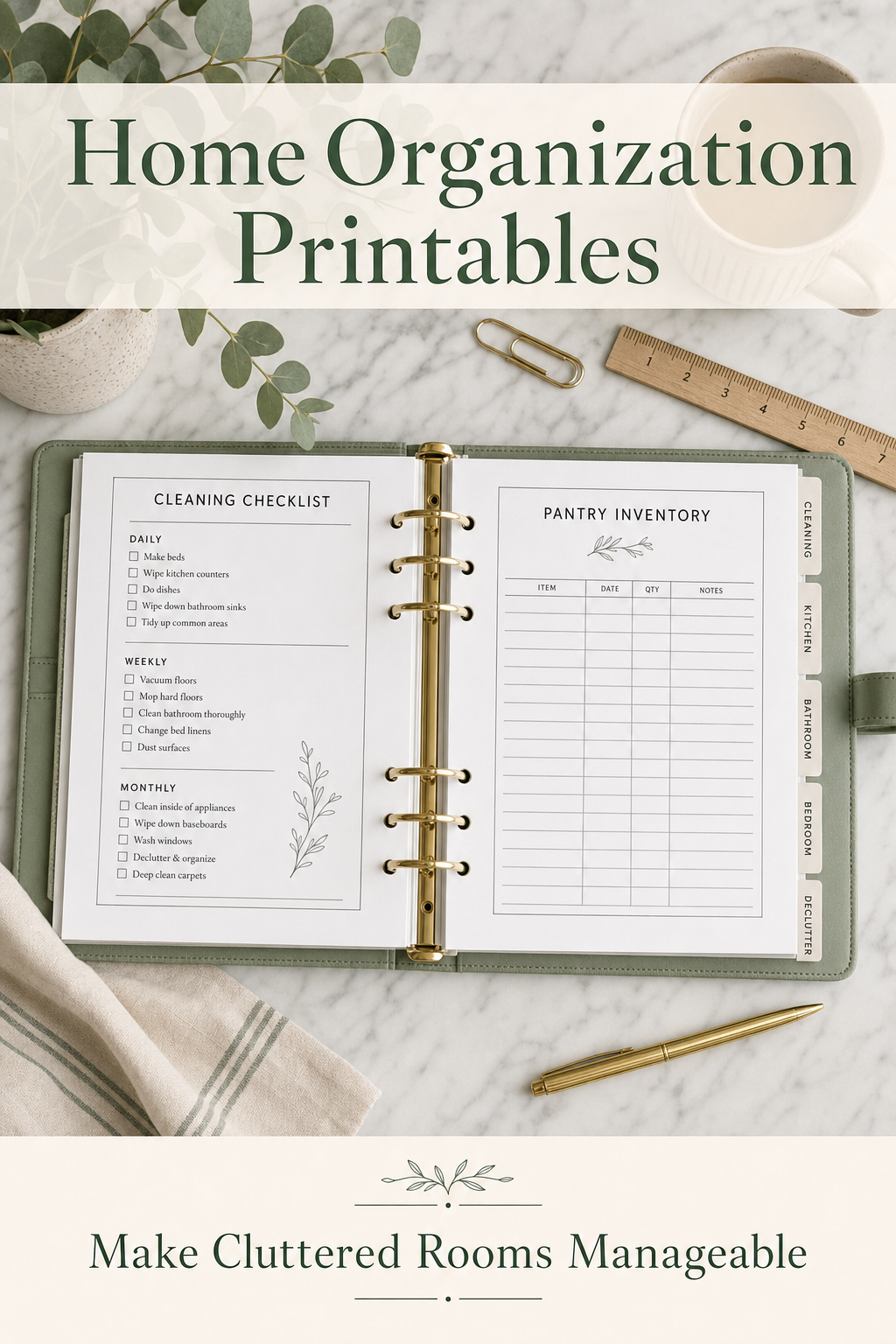
The best printables have three sections on a single sheet: daily tasks (5–6 items with checkboxes), weekly rotation (7 tasks, checkbox per day-of-week), and a small "notes" section for the week.
What to look for in a good printable
- Fits on one letter-size or A4 page. Two-pagers get ignored.
- Has actual checkboxes, not just decorative dots. You will use them.
- Weekly rotation lets you choose the day. Fixed "Monday = mop" schedules fail.
- Comes as PDF, not a Canva editable. You want to print and go, not learn Canva.
- Includes a monthly section on the back. Bonus if it does.
My 3 favorite Etsy versions
Affiliate note: This post contains affiliate links. When you buy through these links, I earn a small commission at no additional cost to you.
1. The classic three-layer schedule
Best all-around. Daily on top, weekly rotation in the middle, monthly on the back. Minimalist black-and-white design.
Where to buy: ETSY — weekly cleaning schedule printable
2. The color-coded family version
Uses colored columns so different family members can be assigned different weekly tasks. Great if you're trying to distribute the load.
Where to buy: ETSY — family cleaning chore chart printable
3. The minimalist single-sheet version
Just the essentials, one page, no fluff. Best for people who bounce off "cute" printables.
Where to buy: ETSY — minimalist cleaning schedule PDF
Common mistakes with cleaning schedules
Trying to do everything in one day. "Cleaning day" is a myth that leaves you exhausted every Saturday and resenting the whole system. Split the work.
Not including a "recovery" plan. Skip a week? You need a written 20-minute "reset" checklist you can run to get back on track. Otherwise skipping one week becomes skipping four.
Ignoring the physical clutter side. Cleaning schedules assume a decluttered baseline. If your rooms are full of stuff, no cleaning schedule will make them look clean. Handle the decluttering first — the room-by-room organization printables are the companion to this.
Buying the "prettiest" printable. The one you'll actually use is boring. Save the aesthetic ones for planners.