The prevailing rug advice — "always go bigger than you think" — is right for houses and wrong for small apartments.
In a 400-square-foot studio, a 9×12 rug swallows the room. It looks like you're standing on a rug, not in a room with a rug. The whole space collapses into a single visual plane.
Small apartments need a different playbook: rugs that define zones, not rugs that fill floors. Here's how to get that right, plus specific size and pattern recommendations for the most common small-space layouts.
The counterintuitive rule for small rooms
The instinct is to buy a smaller rug so it doesn't overwhelm the room. That instinct is half right.
The full rule: buy the smallest rug that still fits your furniture arrangement — but never smaller.
In small spaces, a rug that's too small (furniture legs floating off it) is worse than in a big space. It signals "I couldn't afford a bigger rug." A properly-sized 5×8 that anchors a loveseat and coffee table looks intentional and expensive.
Layout-by-layout rug sizing
Studio apartment (400–500 sqft)
The classic move here is two rugs, one per zone:
- Living zone: 5×8 rug with all-legs-on for the loveseat, coffee table, and one accent chair
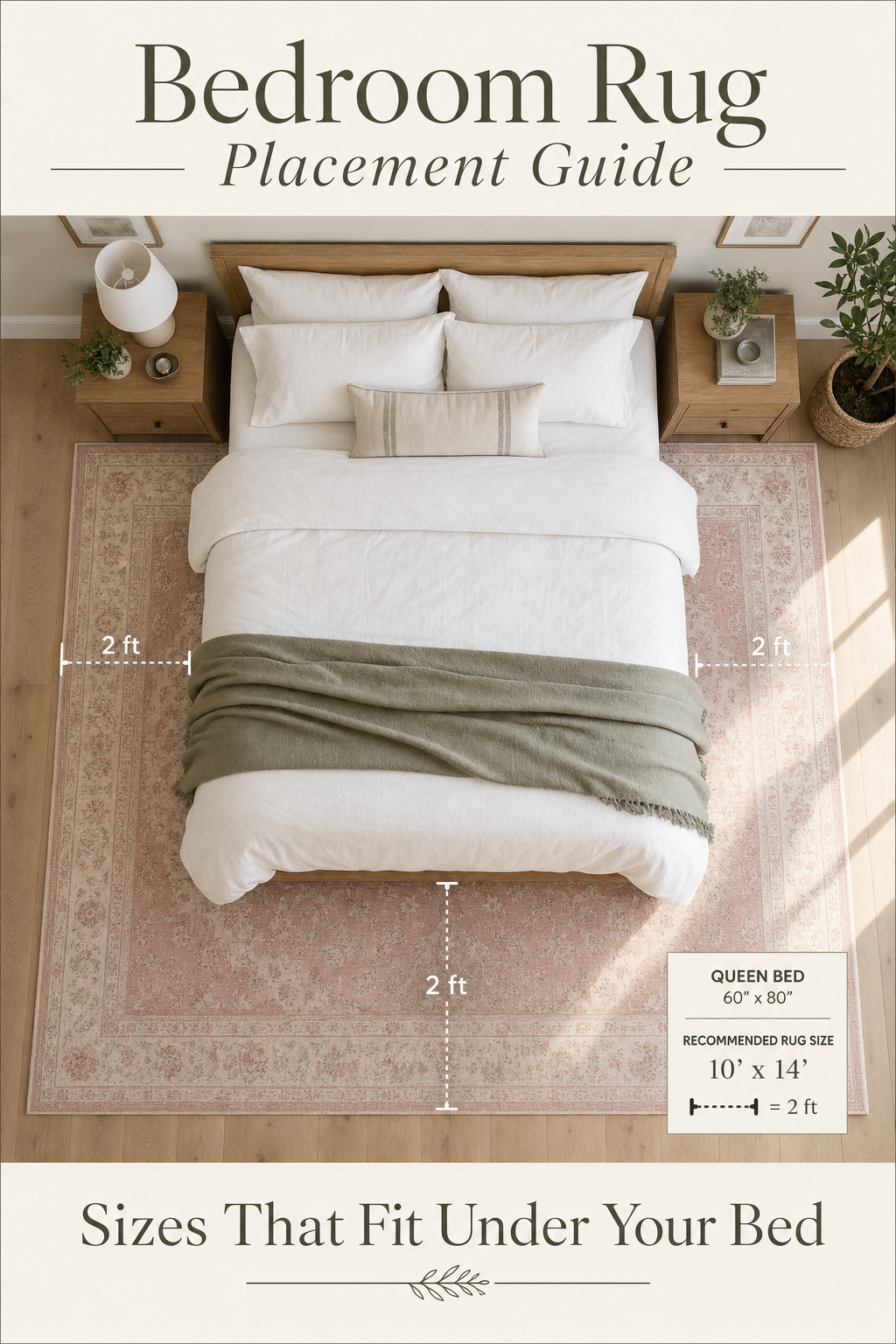
- Sleeping zone: 3×5 or 4×6 rug on the far side of the bed only (Style 3 from the bedroom rug guide)
The two rugs visually separate the space more effectively than any curtain or bookcase divider.
Don't do: one big 8×10 covering both zones. It merges the living and sleeping areas visually, which is the opposite of what you want in a studio.
Small one-bedroom apartment (500–700 sqft)
- Living room: 5×8 (loveseat setup) or 6×9 (small sofa + accent chair setup)
- Bedroom: 6×9 under a queen bed with the perpendicular placement (Style 2)
Narrow rental living room (long and skinny)
Long narrow rooms are the hardest small-space configuration. Two smaller rugs work better than one:
- Seating end: 5×7 or 5×8 under the sofa arrangement
- Other end (usually near TV or workspace): 3×5 for a chair or 4×6 for a small desk
Pattern rules for small spaces
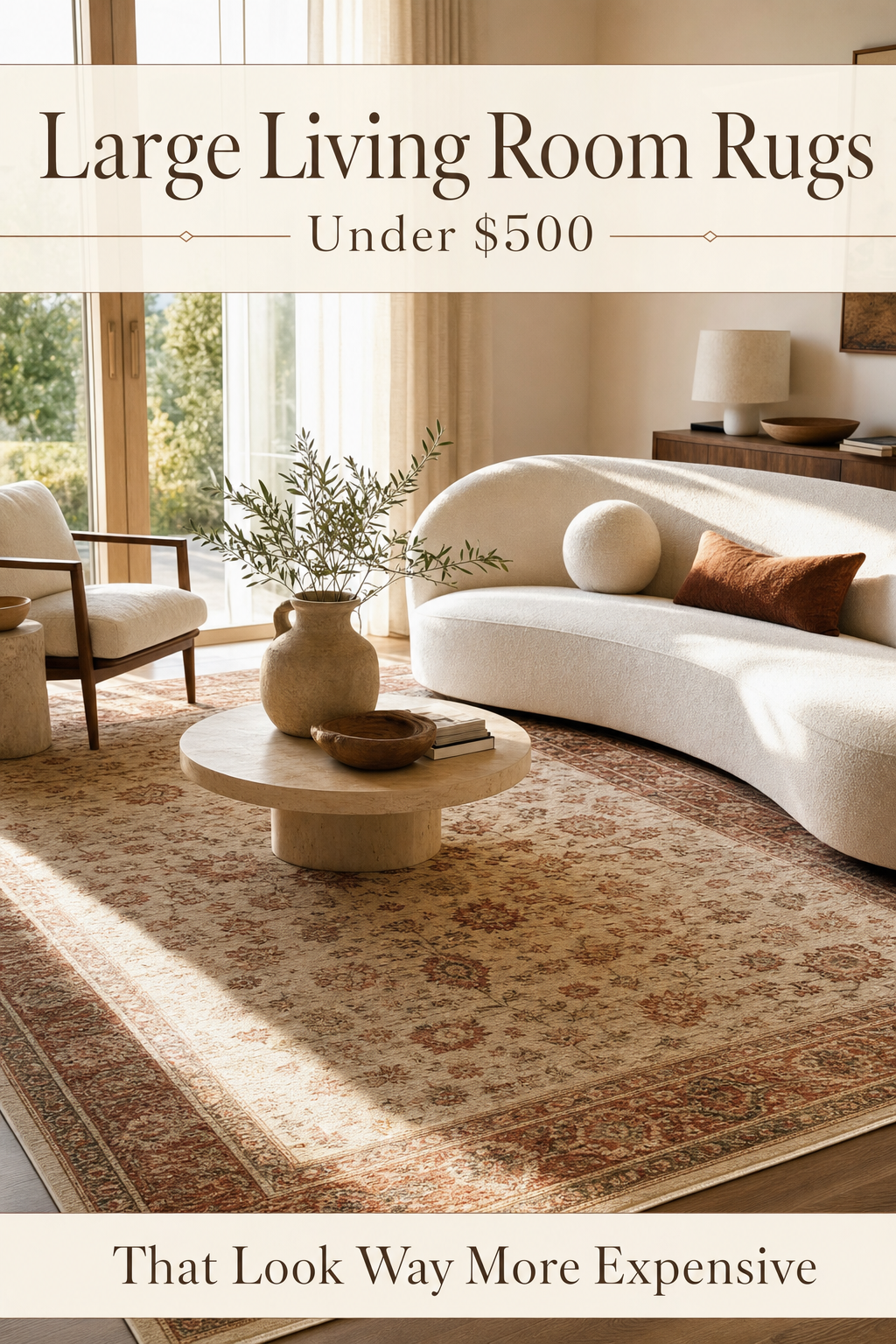
Small rooms are more forgiving of low-contrast patterns and less forgiving of high-contrast ones. A busy, high-contrast rug in a 250-square-foot room becomes the only thing your eye sees. A subtle vintage-print rug in the same space adds depth without dominating.
What works in small rooms:
- Muted vintage prints in low-contrast palettes (washed cream + faded rust, sage + oatmeal, sand + soft brown)
- Textured neutrals (loop pile, natural fiber weaves) — pattern from texture, not color
- Small-scale traditional prints (nothing bigger than a saucer)
What doesn't:
- Bold graphic modern patterns
- High-contrast black and white
- Anything with medallion patterns bigger than a dinner plate
The rug layering trick
The one exception to "small rugs in small rooms" is rug layering: a large neutral natural-fiber base (jute, sisal, or a low-pile flat weave), with a smaller pattern rug on top.
This gives you the visual coverage of a large rug without the visual weight, because the base blends into the floor color. Your eye reads the top pattern rug as the "real" rug, and the room feels both anchored and airy.
Layering recipe that always works:
- Base: 8×10 jute or natural sisal rug ($150–$250)
- Top: 5×7 or 6×8 vintage-print rug at 45° angle or straight ($200–$400)
Color rules that make rooms feel bigger
Rugs affect perceived room size more than paint colors. The right rug color can make a 350-square-foot studio feel like 450.
Rugs that expand the room:
- Light neutrals (cream, ivory, oatmeal)
- Cool tones (sage, dusty blue, soft grey)
- Rugs that match your floor tone within 1–2 shades
Rugs that shrink the room:
- Deep saturated darks (charcoal, navy, deep burgundy) — beautiful in big rooms, oppressive in small ones
- High-contrast color combinations
- Rugs that contrast sharply with your floor
My picks for small spaces
Affiliate note: This post contains affiliate links. When you buy through these links, I earn a small commission at no additional cost to you.
Best studio zoning combo
A 5×8 vintage-print for the living zone and a small 3×5 accent for the bedside. Both under $300 combined.
- Living zone: RUG SOURCE — 5×8 vintage collection under $200
- Bedside: RUG SOURCE — 3×5 accent rug collection
Best neutral base for layering
A jute base rug is the small-space secret weapon.
Best 6×9 for a small one-bedroom
The size that fits 80% of small living rooms perfectly.